Source eco friendly recyclable glass storage jar for Beverages, Food, and Honey
Compare 30 listings for eco friendly recyclable glass storage jar options from Chinese manufacturers. Buyers can review specifications like 100ml to 3000ml capacities, ISO and CE certifications, and custom logo services for various industrial uses.
Key considerations
Products List


Comprehensive Sourcing Guide
Strategic Sourcing Guide for Eco-Friendly Recyclable Glass Storage Jars
Understanding Product Attributes and Core Specifications
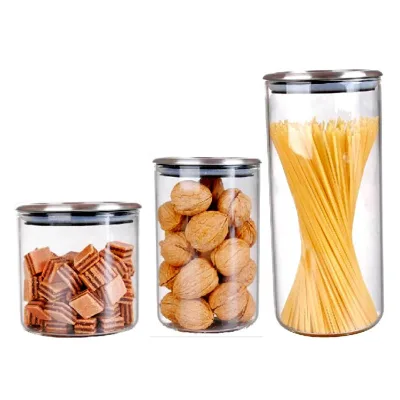
When initiating a procurement strategy for eco-friendly recyclable glass storage jars, the buyer must first distinguish between the broad category of glass containers and the specific attributes that define a sustainable, high-performance product. Based on available market data, the target product often manifests as a cylindrical or round vessel designed primarily for food storage, including applications ranging from honey and beverages to general dry goods. The physical form is consistently described as a cylinder or round shape, with specific model identifiers such as IDG-101, IDLU-101, and IDKYM107 appearing in technical listings. These identifiers often correlate with specific volume capacities, which are critical for inventory planning and packaging line integration.
The standard capacity ranges observed in the current supply landscape vary significantly, spanning from small 45ml units to large 720ml or even 1L configurations. Some specifications explicitly list a range from 100ml to 3000ml, indicating a broad utility for both consumer retail and industrial bulk storage. A key technical observation is the "Unfolded" state of the product, suggesting these are rigid containers rather than collapsible or flexible packaging. The material composition is inherently glass, which aligns with the "Eco-Friendly" and "Environmentally-Friendly" attributes frequently cited in product descriptions. This material choice supports the recyclability requirement, as glass is a 100% recyclable material that can be melted down and reformed indefinitely without loss of purity.
Furthermore, the functional design often includes specific features such as being "Airtight" to ensure product freshness and longevity. The absence of handles in certain models, such as those described as "without Handle," points to a design optimized for stacking, palletizing, and automated filling lines. The "Sets" attribute, sometimes listed as 1-3PCS, may refer to sample kits or specific packaging configurations for retail display, rather than the unit of sale for bulk procurement. Buyers must verify whether the "Round Glass Jar" or "Honey Jar" keywords apply to their specific use case, as the terminology can sometimes overlap with aluminum caps or other closure systems, which are distinct components in the final assembly.
Compliance, Certification, and Environmental Standards
Verifying compliance and certification is a non-negotiable step in sourcing eco-friendly glass jars, particularly for markets with strict food safety and environmental regulations. The supply data indicates that suppliers may hold certifications such as ISO and CE, which are critical markers for quality management systems and product safety, respectively. However, the presence of these certifications in a general listing does not guarantee that every specific SKU or batch adheres to them without direct verification. Buyers must request current, valid certificates for the specific models they intend to purchase, ensuring the certification scope covers the manufacturing of glass food containers.
The "Eco-Friendly" claim requires rigorous scrutiny. While the product is described as environmentally friendly, this is an observation of the material's inherent properties rather than a guaranteed certification of the entire supply chain. To substantiate this claim, buyers should inquire about the source of the raw materials, the energy efficiency of the manufacturing process, and the recyclability of the packaging materials used for shipping, such as the "White Box with Bubble Bag" or "Pallet or Carton Packaging" mentioned in listings. The "H.S Code" 7010902000 is a specific tariff classification for glass containers, which can be used to verify the product category during customs clearance and to ensure accurate duty calculations.
Additionally, the "Industrial Use" is listed as "Beveragr" or "Food Storage," which implies the product must meet food-grade standards. Buyers should verify that the glass is free from lead and cadmium, especially if the jars are intended for acidic foods or long-term storage. The "Non-Refillable" feature noted in some listings suggests a single-use or limited-use design, which may conflict with a circular economy goal if the buyer intends for the jars to be reused. Therefore, the distinction between "Non-Refillable" and "Recyclable" is vital; a jar can be recyclable even if it is not designed for refill, but the buyer must confirm the intended lifecycle with the supplier.
Cost Drivers and Pricing Dynamics
The pricing structure for glass storage jars is influenced by a complex interplay of factors, including material costs, manufacturing complexity, order volume, and logistics. The observed price range in the market spans from $0.01 to $3.16 USD, a wide disparity that reflects differences in size, wall thickness, customization levels, and order quantity. The "Price: Send Inquiry, Get Discount Price" attribute indicates that the listed prices are likely indicative or based on very specific conditions, and actual costs are determined through negotiation. This dynamic pricing model is common in B2B procurement, where economies of scale play a significant role.
The Minimum Order Quantity (MOQ) is a primary cost driver, with observed ranges spanning from 100 to 100,000 units. For smaller buyers or those testing new product lines, the lower end of the MOQ spectrum (100-1000 units) may be accessible, but the unit cost will be higher. Conversely, large-scale procurement can leverage the upper end of the MOQ range to achieve significant cost reductions. The "Custom Order: Accept" and "OEM/ODM: Highly Welcomed" attributes suggest that customization adds a premium to the base price. Customizations such as specific shapes, unique colors (though "Transparent" is the primary observation), or custom logos will increase the unit cost and may require a higher MOQ to be economically viable.
Logistics and packaging also contribute to the total landed cost. The "prod_packing" options, such as "White Box with Bubble Bag" or "Pallet or Carton Packaging," affect the volume and weight of the shipment. Glass is heavy and fragile, so the choice of packaging directly impacts shipping costs and the risk of breakage. Buyers should calculate the cost per unit including freight, insurance, and duties, rather than focusing solely on the ex-works price. The "Payment: T/T" or "Tt" terms are standard, but the timing of payments (e.g., deposit vs. balance) can influence cash flow and overall financial planning.
Typical Applications and Functional Versatility
The versatility of eco-friendly recyclable glass storage jars makes them suitable for a diverse range of applications across multiple industries. The primary use cases identified include "Food Storage," "Beer Cans/Carbonated Drinks Cans," and "Honey Jar" applications. The "Airtight" function is particularly crucial for preserving the quality of perishable goods, preventing oxidation, and maintaining flavor profiles in beverages and food products. The "Round" and "Cylinder" shapes are optimized for efficient stacking and storage in warehouses and retail environments, maximizing space utilization.
In the beverage industry, these jars may serve as alternative packaging to aluminum cans, offering a premium, transparent presentation that allows consumers to view the product. The "Industrial Use" classification as "Beveragr" suggests compatibility with carbonated or non-carbonated drink lines. For the food sector, the jars are ideal for storing dry goods, sauces, jams, and honey, where the inert nature of glass prevents chemical reactions with the food contents. The "Custom Logo" and "OEM" capabilities allow brands to differentiate their products through unique labeling and branding, enhancing market appeal.
The "Style" attributes, ranging from "Popular" to "Classical Chinese Style," indicate that the design aesthetic can be tailored to specific cultural or market preferences. This flexibility is essential for global brands looking to localize their packaging for different regions. The "Folded: Unfolded" status confirms that these are rigid containers, suitable for products that require structural integrity during transport and storage. Whether for small-scale artisanal producers or large industrial manufacturers, the ability to customize the model (e.g., IDG-101, IDLU-101) ensures that the packaging meets the specific volume and functional requirements of the product being stored.
Supplier Evaluation and Selection Criteria
Selecting the right supplier requires a systematic evaluation of their capabilities, reliability, and alignment with the buyer's sustainability goals. The "Service: 24 Hours Online" attribute suggests a high level of responsiveness, which is valuable for resolving technical queries and managing order logistics. However, buyers should look beyond online availability and assess the supplier's production capacity, quality control processes, and track record in delivering eco-friendly products. The "Location" data points to suppliers in Shanghai, Hebei, and other parts of China, which are major manufacturing hubs for glass products. Buyers should consider the logistical implications of these locations, including lead times and shipping routes.
The "OEM/ODM: Highly Welcomed" and "Customization: Available" attributes indicate that suppliers are flexible and capable of meeting unique requirements. However, buyers must verify the supplier's ability to handle custom orders at scale without compromising quality. The "Sample: Free" offering is a significant advantage, allowing buyers to physically inspect the product for quality, fit, and finish before committing to a large order. This step is crucial for validating the "Airtight" seal and the overall durability of the glass.
When evaluating suppliers, buyers should also consider their commitment to sustainability. While the product is described as "Eco-Friendly," the supplier's broader environmental practices, such as waste management and energy usage, should be investigated. The "Certification: ISO, CE" mentioned in the data provides a baseline for quality and safety, but buyers should request evidence of these certifications and verify their validity. Additionally, the "Payment: T/T" terms should be reviewed to ensure they align with the buyer's financial policies and risk tolerance.
Quality Control and Long-Term Procurement Considerations
Ensuring consistent quality is paramount in the procurement of glass storage jars, as defects can lead to product spoilage, safety hazards, and reputational damage. The "Function: Airtight" and "Feature: Non-Refillable" attributes necessitate rigorous testing to ensure that the seals and closures perform as intended. Buyers should implement a quality control plan that includes incoming inspection, in-process monitoring, and final random sampling. Key quality metrics to monitor include wall thickness, dimensional accuracy, and the integrity of the airtight seal.
Long-term procurement considerations involve building a resilient supply chain that can adapt to market changes and demand fluctuations. The "Custom Order: Accept" and "OEM/ODM" capabilities provide flexibility, but buyers should establish clear communication channels and contractual agreements to ensure consistency in future orders. The "Sets: 1-3PCS" attribute may indicate a need for periodic reordering of samples or small batches, which should be factored into the procurement schedule.
Furthermore, buyers should plan for the end-of-life of the product. The "Eco-Friendly" and "Recyclable" nature of the glass should be leveraged to support the buyer's own sustainability goals. This includes educating consumers on proper disposal and recycling practices. The "H.S Code" 7010902000 should be used to track imports and ensure compliance with local regulations regarding glass recycling. By integrating these considerations into the procurement strategy, buyers can ensure a sustainable, efficient, and cost-effective supply chain for their glass storage jar needs.
Comparative Analysis of Product Models
To facilitate informed decision-making, the following table compares key attributes of the observed product models, highlighting their specific applications and specifications. This comparison aids in selecting the most suitable model for a given use case.
| Product Model | Standard Capacity | Shape | Primary Usage | Packaging Style | Origin |
|---|---|---|---|---|---|
| IDG-101 | 45ml to 720ml | Round | Food Storage | White Box with Bubble Bag | China |
| IDLU-101 | 100ml to 1L | Round | Food Storage | Pallet or Carton Packaging | China |
| IDKYM107 | 100ml to 3000ml | Round | Food Storage | Pallet or Carton Packaging | China |
| 202#RPT | 202#RPT | Cylinder | Beer/Carbonated Drinks | Not Specified | Shanghai, China |
| GJ08 | 1L or Customized | Round | Food Storage | White Box with Bubble Bag | Hebei, China |
This table illustrates the diversity in capacity and packaging options available to buyers. The IDG-101 and GJ08 models, for instance, are suited for smaller, retail-focused applications with protective bubble bag packaging, while the IDKYM107 and IDLU-101 models offer larger capacities and palletized packaging for industrial use. The 202#RPT model is specifically noted for beverage applications, highlighting the importance of matching the product model to the intended use case. By carefully analyzing these attributes, buyers can optimize their procurement strategy to meet specific operational and sustainability requirements.
FAQs
What certifications do eco friendly recyclable glass storage jar suppliers hold?
Suppliers often hold ISO and CE certifications for quality and safety. Buyers must verify these certificates apply to the specific glass food container models like IDG-101 or IDLU-101 before purchasing.
How can I customize the logo on these glass jars?
Custom logos are available for these eco friendly recyclable glass storage jars. The product accepts custom orders and OEM requests, allowing brands to apply unique designs on the transparent glass surface.
What is the minimum order quantity for these glass jars?
The minimum order quantity ranges from 100 to 100,000 units depending on the supplier. Lower MOQs suit small buyers, while larger volumes secure better pricing for industrial food storage needs.
Can these jars be used for storing honey and beverages?
Yes, these jars are designed for food storage including honey and carbonated drinks. Their airtight function preserves freshness, and they are suitable for various capacities from 45ml up to 3000ml.
Where are the manufacturers of these glass jars located?
Manufacturers are located in major Chinese hubs like Shanghai and Hebei. Buyers should consider these origins when calculating lead times and shipping costs for the transparent cylindrical containers.
What is the price range for these recyclable glass storage jars?
The observed price range spans from 0.01 to 3.16 USD per unit. Actual costs depend on order volume, customization levels, and specific model specifications like IDKYM107 or standard capacities.